Blackjack Skill Tiers and Tailored Incentives: Casinos' Data-Driven Reward Systems
Mara Griffin · Sep 24, 2026
Blackjack Skill Tiers and Tailored Incentives: Casinos' Data-Driven Reward Systems
Blackjack operators track player proficiency through detailed hand histories and behavioral metrics that include decision accuracy, bet sizing patterns, and session duration; these measurements allow casinos to segment audiences into distinct tiers such as novice, intermediate, and advanced players. Data platforms integrate these inputs with loyalty program records so that reward structures align with demonstrated skill rather than volume alone.
Measuring Proficiency Through Analytics
Modern systems record every decision against optimal strategy charts and assign scores that reflect consistency over hundreds of hands, while algorithms adjust for variance introduced by specific rule sets at different tables. Observers note that operators in regulated markets feed this information into centralized databases that flag players whose metrics exceed certain thresholds, triggering automated review processes that determine eligibility for customized offers.
Research from the University of Nevada, Reno indicates that proficiency scores correlate strongly with long-term hold percentages, which means casinos can forecast lifetime value more precisely when they separate skilled participants from recreational ones. Those who study these systems know that the separation process often relies on machine learning models trained on millions of hands, allowing real-time updates as new data arrives.
Custom Offer Structures by Tier
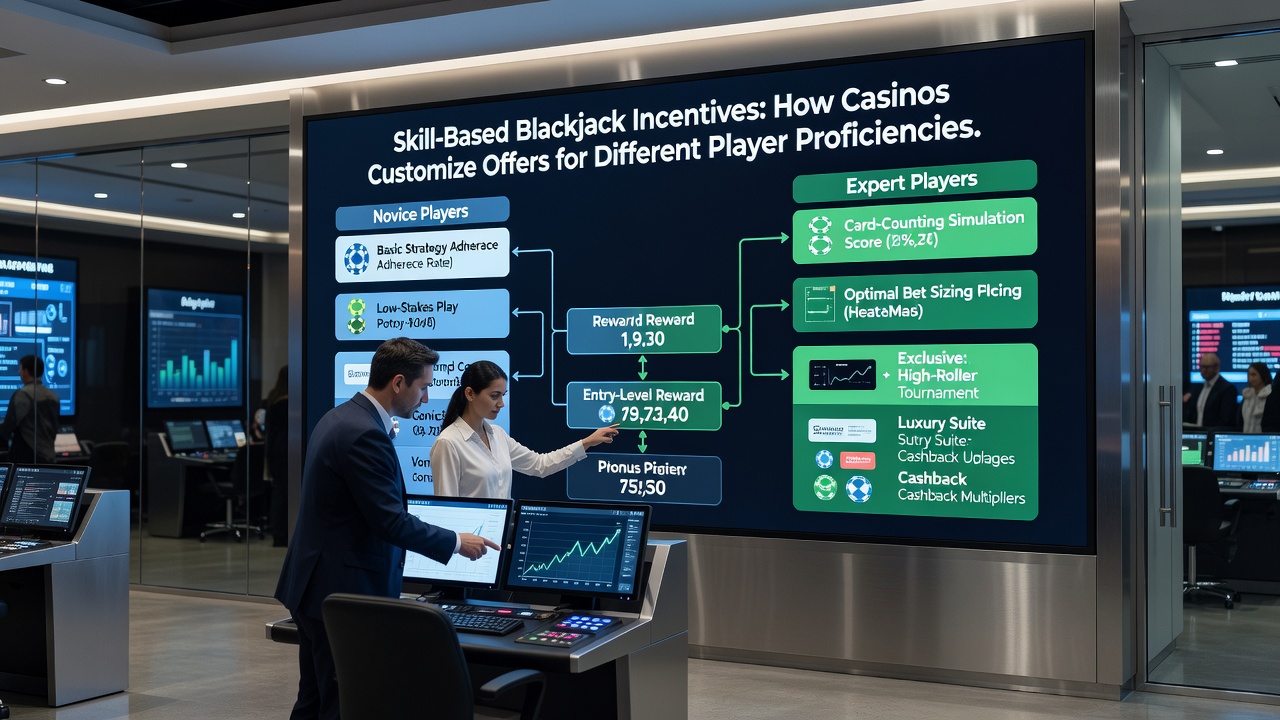
Novice players typically receive entry-level match bonuses paired with low wagering multipliers that encourage extended play without requiring advanced strategy knowledge, whereas intermediate participants gain access to cashback tiers scaled to average bet size and accuracy rates. Advanced players encounter invitations to exclusive events or reduced house-edge table access that reward consistent performance and loyalty simultaneously.
Operators adjust these offers dynamically, so a player whose score improves over a quarter might see an upgrade from standard reloads to personalized free-play credits calculated on projected edge contribution. Figures from industry reports show that such segmentation increases retention rates across all groups when incentives match actual behavior patterns rather than generic promotions.

Regional Implementation Patterns
In North American jurisdictions, casinos operating under Nevada Gaming Control Board oversight have expanded skill-tier programs since early 2025, with several properties linking tier status directly to comped room nights and tournament entries. European markets follow similar models but incorporate additional compliance layers that require explicit player consent for data usage in reward calculations.
Australian operators, guided by state-level gaming authorities, have introduced skill-based leaderboards that feed into monthly prize pools, creating visible progression markers that motivate continued improvement. Those who've examined cross-border data observe that these regional variations produce comparable retention lifts despite differing regulatory frameworks.
September 2026 Developments on the Horizon
Industry analysts project that new table game reporting standards scheduled for September 2026 will require operators in multiple U.S. states to disclose how skill metrics influence bonus distribution, which could standardize transparency practices across properties. Preparations already underway include upgrades to tracking software so that reports can isolate proficiency-driven offers from volume-based ones without exposing proprietary algorithms.
These upcoming requirements align with broader trends toward responsible gaming disclosures, and casinos in several markets have begun pilot programs that preview the level of detail regulators will expect. The changes are expected to affect how advanced players receive invitations, since offers tied to measurable skill must now include clear eligibility criteria in public documentation.
Integration with Broader Loyalty Ecosystems
Skill-based incentives rarely stand alone; they intersect with existing point systems so that accuracy bonuses convert into tier points at accelerated rates for higher-proficiency segments. This layered approach lets operators maintain unified loyalty structures while still delivering differentiated value, because the conversion multipliers adjust automatically based on the same proficiency scores used for other rewards.
One study of multi-property operators revealed that players who advance tiers through skill metrics show higher cross-game engagement than those who advance solely through volume, which suggests the customization strategy influences overall portfolio behavior. Casinos continue to refine the balance between these pathways to keep incentives competitive across player types.
Conclusion
Skill-based blackjack incentives represent a shift from blanket promotions toward precision-matched rewards that reflect individual performance data. As tracking technology matures and regulatory expectations evolve ahead of September 2026, operators maintain systems that segment audiences effectively while meeting compliance standards across jurisdictions. The approach continues to draw on analytics that connect proficiency scores directly to offer design, producing measurable differences in how various player groups interact with casino programs over time.